

Manalapan
(732) 845-0100

Understanding Grades of Ankle Sprains in Volleyball

An ankle sprain occurs when ligaments in the ankle are stretched or torn beyond their normal limits. Volleyball players risk this injury because jumping, landing, and changing direction place sudden stress on the ankle. Symptoms may include pain, swelling, and difficulty bearing weight. Risk factors include previous ankle injuries, poor balance, and awkward landings.

Volleyball ankle sprains commonly happen when a player lands on another player’s foot, rolls the ankle while moving, or loses balance while changing direction. A first-degree sprain is mild and involves ligament stretching with minor damage. Pain and swelling are usually limited, and walking may remain possible. A second-degree sprain involves a partial ligament tear, causing pain, swelling, and difficulty walking. A third-degree sprain is the most severe, involving a complete ligament tear. It may cause severe swelling, bruising, and an inability to bear weight.


A podiatrist can evaluate the ankle by reviewing how the injury occurred and checking swelling, movement, and stability. X-rays or imaging tests may be recommended if a fracture is suspected. Treatment depends on the sprain grade and may include rest from volleyball and compression, followed by gradual activity. Severe injuries may require bracing or temporary immobilization.


Preventing another ankle sprain matters because a previous injury can increase the risk of chronic instability. Players should return to volleyball gradually and follow rehabilitation instructions instead of rushing back when pain improves. Supportive volleyball shoes and balance exercises may help protect the ankle. Persistent pain or instability should receive professional attention after a landing injury. If you have sprained your ankle while playing volleyball, it is suggested that you consult a podiatrist for effective relief and treatment solutions.

Sports related foot and ankle injuries require proper treatment before players can go back to their regular routines. For more information, contact Dr. Charles Marchese of Manalapan Foot & Ankle. Our doctor can provide the care you need to keep you pain-free and on your feet.

Sports Related Foot and Ankle Injuries

Foot and ankle injuries are a common occurrence when it comes to athletes of any sport. While many athletes dismiss the initial aches and pains, the truth is that ignoring potential foot and ankle injuries can lead to serious problems. As athletes continue to place pressure and strain the area further, a mild injury can turn into something as serious as a rupture and may lead to a permanent disability. There are many factors that contribute to sports related foot and ankle injuries, which include failure to warm up properly, not providing support or wearing bad footwear. Common injuries and conditions athletes face, including:

  • Plantar Fasciitis
  • Achilles Tendinitis
  • Achilles Tendon Rupture
  • Ankle Sprains

Sports related injuries are commonly treated using the RICE method. This includes rest, applying ice to the injured area, compression and elevating the ankle. More serious sprains and injuries may require surgery, which could include arthroscopic and reconstructive surgery. Rehabilitation and therapy may also be required in order to get any recovering athlete to become fully functional again. Any unusual aches and pains an athlete sustains must be evaluated by a licensed, reputable medical professional.

If you have any questions please contact our office located in Manalapan, NJ . We offer the newest diagnostic and treatment technologies for all your foot and ankle needs.
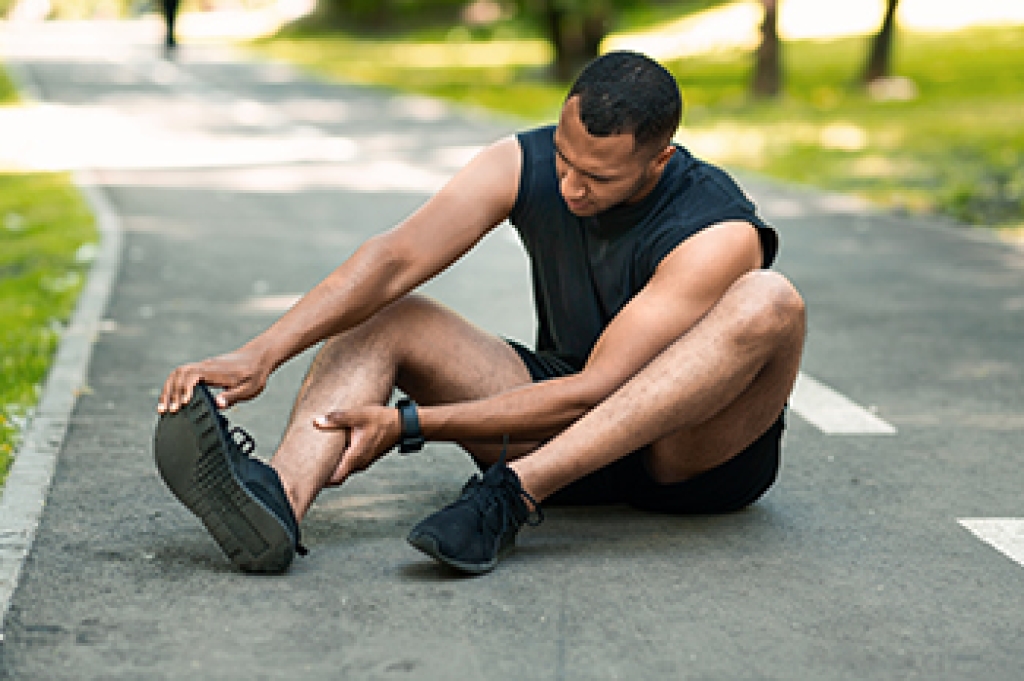
Read more about Sports Related Foot And Ankle Injuries

Running-Related Foot and Ankle Injuries

Running should be an enjoyable way to stay active, but repeated impact can stress the feet and ankles. Heel pain is a running complaint, and may develop when tissues are overloaded. Achilles tendon pain affects the tendon connecting the calf muscles to the heel bone. Other running injuries can involve the arches, ankles, or forefoot. Symptoms may range from soreness after exercise to pain during walking. Recognizing discomfort early can help prevent a minor problem from becoming more limiting.

Several factors can increase the risk of running-related foot and ankle injuries. Suddenly increasing mileage, running on uneven surfaces, or wearing worn-out shoes can place extra strain on the feet. Achilles tendon pain may develop after repeated running without enough recovery. Heel pain can occur when the plantar fascia or other structures become irritated. Swelling, tenderness, and pain during activity are signs that your feet may need attention.


Prevention starts with consistent support. Choose running shoes that fit properly and provide appropriate cushioning. Replace worn footwear before it stops supporting your stride. Before running, warm up gradually to prepare your muscles and joints. Afterward, cool down and allow your body to recover. Build up distance and intensity slowly rather than making sudden changes. Additionally, rest between demanding workouts and pay attention to pain that becomes persistent or worsens.


When running pain develops, a podiatrist will evaluate your symptoms and examine your foot and ankle. Your running habits may also be reviewed, and imaging tests may be recommended when a fracture or significant tendon injury is suspected. Treatment can include activity modification, wearing supportive footwear, or medication, when appropriate. Your podiatrist can help you return to running while reducing reinjury risk. If you have foot or ankle pain from running, it is suggested that you consult a podiatrist for effective relief and treatment solutions, enabling you to return to this enjoyable sport.

Exercising your feet regularly with the proper foot wear is a great way to prevent injuries. If you have any concerns about your feet, contact Dr. Charles Marchese of Manalapan Foot & Ankle. Our doctor will treat your foot and ankle needs.

How to Prevent Running Injuries

Many common running injuries are caused by overuse and overtraining. When the back of the kneecap starts wearing out and starts causing pain in your knee, this is commonly referred to as runner’s knee. Runner’s knee is a decrease in strength in your quadriceps and can occur if you’re not wearing properly fitted or supporting shoes. To prevent runner’s knee, focusing on hip strengthening is a good idea, as well as strengthening your quads to keep the kneecaps aligned.

What Are Some Causes of Running Injuries? 
- One cause of a common running injury is called iliotibial band syndrome.
- Plantar fasciitis is also another common injury.
- Stress fractures can occur from overtraining, lack of calcium, or even your running style.

Best Ways to Prevent Running Injuries
- Wear footwear that fits properly and suits your running needs.
- Running shoes are the only protective gear that runners have to safeguard them from injury.
- Make a training schedule. Adding strengthening exercises as well as regular stretching can help keep you strong and limber and can lessen the possibility of injuries.
- Stretching keeps muscles limber; this will help you gain better flexibility.

If you have any questions, please feel free to contact our office located in Manalapan, NJ . We offer the newest diagnostic and treatment technologies for all your foot care needs.

Read more about Preventing Running Injuries

Reminder: When Was the Last Time...?

Custom orthotics, or shoe inserts, should be periodically replaced. Orthotics must fit properly to give you the best results. Protect your feet and ankles!

Easing Heel Pain in Growing Children

Sever’s disease is a common cause of heel pain in children, especially during periods of rapid growth. Despite the name, it is not actually a disease, but an irritation of the growth plate at the back of the heel where the Achilles tendon attaches. This problem often develops in active children who participate in running or jumping sports, as repeated pulling on the heel can lead to pain, tenderness, or limping. Relief focuses on reducing strain and allowing the irritated area to recover while the child continues to grow. A podiatrist may recommend supportive footwear, stretching programs, temporary activity adjustments, or custom orthotics to improve foot function and reduce stress on the heel. In some cases, additional support may be needed if pain becomes more persistent. Most children improve with appropriate treatment and time. If your child continues to experience heel pain during activity or walking, it is suggested that you visit a podiatrist for a proper diagnosis and appropriate relief tips.

Sever's disease often occurs in children and teens. If your child is experiencing foot or ankle pain, see Dr. Charles Marchese from Manalapan Foot & Ankle. Our doctor can treat your child’s foot and ankle needs.

Sever’s Disease

Sever’s disease is also known as calcaneal apophysitis, which is a medical condition that causes heel pain I none or both feet. The disease is known to affect children between the ages of 8 and 14.

Sever’s disease occurs when part of the child’s heel known as the growth plate (calcaneal epiphysis) is attached to the Achilles tendon. This area can suffer injury when the muscles and tendons of the growing foot do not keep pace with bone growth. Therefore, the constant pain which one experiences at the back of the heel will make the child unable to put any weight on the heel. The child is then forced to walk on their toes.

Symptoms

Acute pain – Pain associated with Sever’s disease is usually felt in the heel when the child engages in physical activity such as walking, jumping and or running.

Highly active – Children who are very active are among the most susceptible in experiencing Sever’s disease, because of the stress and tension placed on their feet.

If you have any questions, please feel free to contact our office located in Manalapan, NJ . We offer the newest diagnostic and treatment technologies for all your foot care needs.

Read more about Sever's Disease

HAPPY HALLOWEEN

Do you have scary feet, unsightly bunions, hammertoes, thickening yellow nails, scaling skin? It’s time for a check up. Call our office today (732) 845-0100 to schedule your appointment!