


Custom orthotics, or shoe inserts, should be periodically replaced. Orthotics must fit properly to give you the best results. Protect your feet and ankles!

Custom orthotics, or shoe inserts, should be periodically replaced. Orthotics must fit properly to give you the best results. Protect your feet and ankles!

Sever’s disease is a common cause of heel pain in children, especially during periods of rapid growth. Despite the name, it is not actually a disease, but an irritation of the growth plate at the back of the heel where the Achilles tendon attaches. This problem often develops in active children who participate in running or jumping sports, as repeated pulling on the heel can lead to pain, tenderness, or limping. Relief focuses on reducing strain and allowing the irritated area to recover while the child continues to grow. A podiatrist may recommend supportive footwear, stretching programs, temporary activity adjustments, or custom orthotics to improve foot function and reduce stress on the heel. In some cases, additional support may be needed if pain becomes more persistent. Most children improve with appropriate treatment and time. If your child continues to experience heel pain during activity or walking, it is suggested that you visit a podiatrist for a proper diagnosis and appropriate relief tips.
Sever's disease often occurs in children and teens. If your child is experiencing foot or ankle pain, see Dr. Charles Marchese from Manalapan Foot & Ankle. Our doctor can treat your child’s foot and ankle needs.
Sever’s Disease
Sever’s disease is also known as calcaneal apophysitis, which is a medical condition that causes heel pain I none or both feet. The disease is known to affect children between the ages of 8 and 14.
Sever’s disease occurs when part of the child’s heel known as the growth plate (calcaneal epiphysis) is attached to the Achilles tendon. This area can suffer injury when the muscles and tendons of the growing foot do not keep pace with bone growth. Therefore, the constant pain which one experiences at the back of the heel will make the child unable to put any weight on the heel. The child is then forced to walk on their toes.
Symptoms
Acute pain – Pain associated with Sever’s disease is usually felt in the heel when the child engages in physical activity such as walking, jumping and or running.
Highly active – Children who are very active are among the most susceptible in experiencing Sever’s disease, because of the stress and tension placed on their feet.
If you have any questions, please feel free to contact our office located in Manalapan, NJ . We offer the newest diagnostic and treatment technologies for all your foot care needs.

Morton’s neuroma involves a thickening of tissue around a small nerve that leads toward the toes. Despite its name, it is not a true nerve tumor. The problem most often develops between the third and fourth toes, although it can also occur between the second and third toes. Nerve compression is believed to play an important role in its development. Irritation, trauma, or excessive pressure may also contribute. Morton’s neuroma can cause persistent discomfort in the ball of the foot and may interfere with walking or other weight-bearing activities.
Symptoms include burning pain, tingling, or numbness that may extend into the toes. Some people describe feeling as though they are walking on a small pebble. Pain may become more noticeable during activities that place pressure on the front of the foot. High-heeled or narrow shoes can aggravate symptoms because they place additional pressure around the toes and affected nerves. Morton’s neuroma usually does not cause a visible lump or skin discoloration. Because other foot problems can produce similar pain, determining the exact source of discomfort is important.
A podiatrist can evaluate forefoot pain by reviewing symptoms and examining the affected area. The examination may include checking for tender pressure points, toe position, and joint movement. Imaging can sometimes help rule out other causes. X-rays may be used to check for arthritis or a stress fracture, while ultrasound can identify abnormalities associated with Morton’s neuroma. Treatment depends on the severity and duration of symptoms. Medical options may include orthotics or corticosteroid injections to reduce pressure or inflammation. If symptoms continue despite non-surgical care, surgery may be considered to release tissue around the nerve or remove the affected portion. If persistent pain, burning, or tingling develops in the ball of your foot, it is suggested that you consult a podiatrist for an evaluation and appropriate treatment options.
Morton’s neuroma is a very uncomfortable condition to live with. If you think you have Morton’s neuroma, contact Dr. Charles Marchese of Manalapan Foot & Ankle. Our doctor will attend to all of your foot care needs and answer any of your related questions.
Morton’s Neuroma
Morton's neuroma is a painful foot condition that commonly affects the areas between the second and third or third and fourth toe, although other areas of the foot are also susceptible. Morton’s neuroma is caused by an inflamed nerve in the foot that is being squeezed and aggravated by surrounding bones.
What Increases the Chances of Having Morton’s Neuroma?
Morton’s neuroma is a very treatable condition. Orthotics and shoe inserts can often be used to alleviate the pain on the forefront of the feet. In more severe cases, corticosteroids can also be prescribed. In order to figure out the best treatment for your neuroma, it’s recommended to seek the care of a podiatrist who can diagnose your condition and provide different treatment options.
If you have any questions, please feel free to contact our office located in Manalapan, NJ . We offer the newest diagnostic and treatment technologies for all your foot care needs.
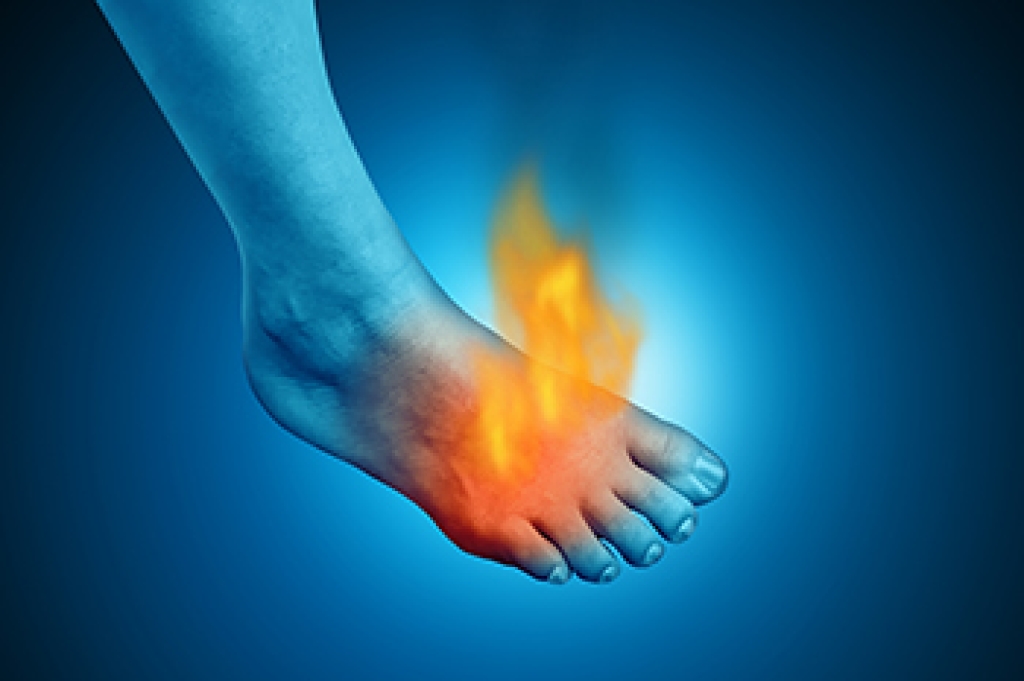
Nerve damage in the foot can develop when nerves between the toe bones become irritated and enlarged. These nerves travel between the toes and supply feeling to the forefoot. Irritation usually affects the nerve between the third and fourth toes, although another space can be involved. The thickened tissue surrounding an irritated nerve is known as a neuroma. Pressure from wearing tight or pointed shoes can contribute to the problem. Other causes include thinning of the protective fat beneath the forefoot and poor foot alignment. Certain foot shapes can also place stress on these nerves.
Symptoms often begin with a mild ache near the third or fourth toe. The discomfort can then become burning, tingling, or sharp pain in the ball of the foot. Some patients feel as though a pebble is trapped under the foot. Pain can spread into the toes and become more noticeable when wearing shoes that squeeze the forefoot. Continued irritation can make closed-toe shoes difficult to tolerate. A podiatrist will ask when the symptoms started and what makes them worse. The examination includes checking the painful area, foot structure, and toe movement. Imaging tests can help to rule out other problems, but they do not always clearly show an irritated nerve.
A podiatrist can reduce pressure on the affected nerve and address causes of irritation. Treatment includes recommending shoes with a wider toe box and proper support. Custom orthotics can improve foot alignment, while carefully placed pads can shift weight away from the painful area. A podiatrist may also provide an injection to decrease pain and inflammation around the nerve. When these measures do not bring enough relief, other office-based procedures can be discussed. Surgery to remove the enlarged nerve is reserved for persistent symptoms and can leave lasting numbness in nearby toes. If you have symptoms of nerve damage in the foot, it is suggested that you schedule an appointment with a podiatrist for a diagnosis and appropriate treatment.
Foot Pain
Foot pain can be extremely painful and debilitating. If you have a foot pain, consult with Dr. Charles Marchese from Manalapan Foot & Ankle. Our doctor will assess your condition and provide you with quality foot and ankle treatment.
Causes
Foot pain is a very broad condition that could be caused by one or more ailments. The most common include:
Diagnosis
To figure out the cause of foot pain, podiatrists utilize several different methods. This can range from simple visual inspections and sensation tests to X-rays and MRI scans. Prior medical history, family medical history, and any recent physical traumatic events will all be taken into consideration for a proper diagnosis.
Treatment
Treatment depends upon the cause of the foot pain. Whether it is resting, staying off the foot, or having surgery; podiatrists have a number of treatment options available for foot pain.
If you have any questions, please feel free to contact our office located in Manalapan, NJ . We offer the newest diagnostic and treatment technologies for all your foot care needs.

Suffering from this type of pain? You may have the foot condition known as Morton's neuroma. Morton's neuroma may develop as a result of ill-fitting footwear and existing foot deformities. We can help.


Copyright © Manalapan Foot & Ankle | Site Map | Nondiscrimination | Design by: Podiatry Content Connection